

Materials in the Collection of the Institute for Research in Okinawan Culture, Hosei University
The Institute for the Study of Okinawan Culture was established in 1972, the year Okinawa was returned to Japan. The Institute has a large number of materials and books related to the Ryukyu Islands and surrounding areas, and one of the most valuable items in its collection is a manuscript written by Iha Fuyuyu (1876-1947), the founder of Okinawa studies and known as the "father of Okinawan studies.
After studying linguistics at Tokyo Imperial University, Iha Fuyuyu studied Okinawan studies in his hometown Okinawa, synthesizing language, literature, history, and folklore, and is especially known for his great contribution to the study of "Omorosaushi (Omorososhi)".
Omorososhi" was a book compiled by the Shuri Royal Government to collect and compile sacred poems from islands and villages around Okinawa. In the Meiji era (1868-1912), Tashiro Steady, who is known as a pioneer in the study of Yaeyama and Taiwan, discovered "Omorosaushi" and entrusted its study to Iha Fuyuyu. However, because of its old language and difficult contents, many researchers are still working on deciphering the song even after Iha's death.
Photo (1) shows a research note (left) of "Omorosaushi" and a research paper titled "Omoro Ochiho Shu" among the manuscripts in Iha's own handwriting. The research notebook is amazing in that the items covered in the notebook have been verified in detail in red ink, and each page is filled with so much writing that the margins are almost empty. Currently, the Institute for Okinawan Studies owns 28 volumes of research notes.
Photo (2) is an autograph manuscript from the last years of Iha Fuyu's life, titled "Okinawa Ryukyu Monogatari (Tales of Okinawa)," a posthumous manuscript in which he wrote down the history of Okinawa. It appears to be the photocopied side of the manuscript, which he wrote while copying it on carbon paper, and the page in the photo is the last page of the manuscript.
The Institute of Okinawan Culture also has another very valuable document, the "Chunanke Monjyo" (Chunan Family Documents).
These documents date from the 18th and 19th centuries and were passed down through the Chunan family, which was involved in diplomatic affairs with China in the former Kume Village (Chinese settlement area) of the Ryukyu Kingdom.
Photo (3) corresponds to one of these texts for learning the Chinese language necessary for diplomatic work, and includes a set of three items, including a collection of vocabulary and conversation with pictures showing the names of various parts of the body. It is a valuable resource for research on the history of Chinese language learning in Okinawa.
Reference: "Omorosashi" (1 & 2), Moriyoshi Tonoma, original text (Iwanami Bunko)
-
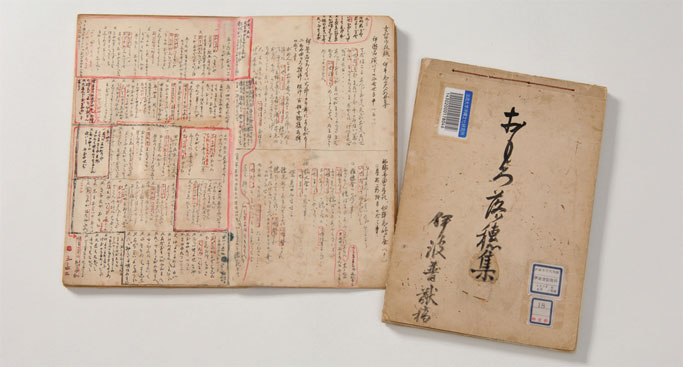
Photo (1) "Omoro Ochiho Shu" (right) has already been included in the complete collection of Iba Fuyuyu and other books, but the research notes have not yet been published, making it a valuable research material.
-
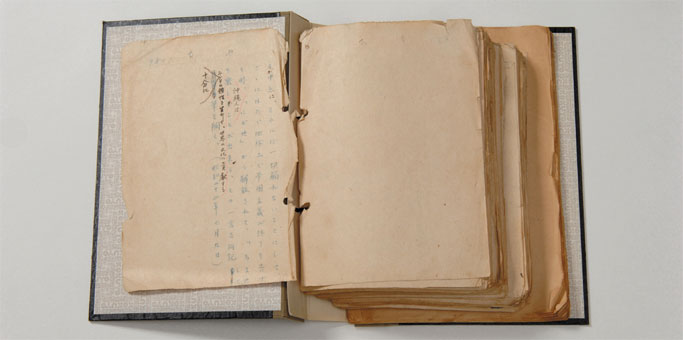
Photo (2): The posthumous manuscript of Iwa Fuyuyu. It was donated by the late Fuyuko Iha, Mrs. Fuyuyu Iha's wife and a poet.
-
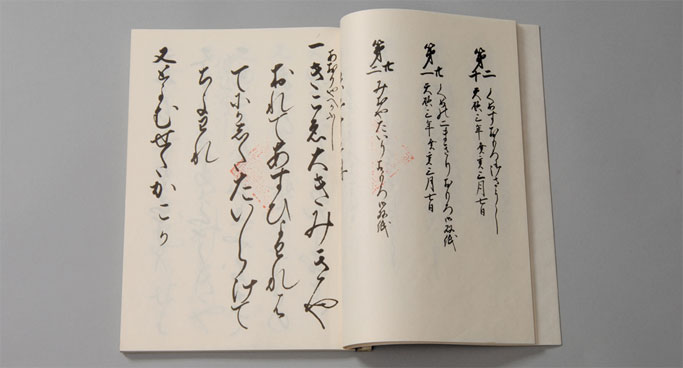
Photo (3): The beginning of the first volume of "Omorosaushi" (manuscript). The "Shuri Oofu no Gosashi" praises the king and the royal city of Shuri, and praises the gods and women involved in the rituals.
-
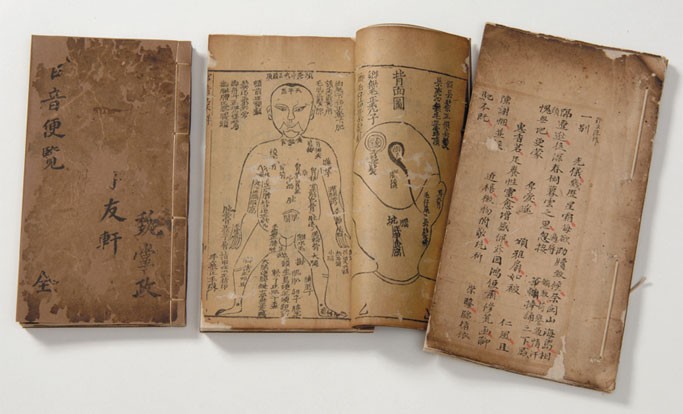
Photo (4): "Chunan Family Documents," one of the most valuable documents in the collection. These three items are extremely rare in Japan and abroad.
For inquiries about materials, please contact
The following links will take you to previous "HOSEI MUSEUM" articles.