

Notices
Seminar: Professor ITO Shoko's Seminar, Department of Community Development, Faculty of Social Policy and Administration
- May 17, 2021
Learning to understand and support minorities suffering from social exclusion while respecting diversity
We study social exclusion and consider the environment and support measures for people who have been discriminated against or excluded from society (the excluded) for one reason or another," introduced Sekiguchi. The seminar is a place where a diverse group of people can gather and conduct research spontaneously, and I am stimulated by the learning experience. I would like to do in-depth research on poverty in the future," she said, looking ahead to her new goal.
In the seminar (specialized course) at the Faculty of Social Policy and Administration, which begins in the second year, students take three courses, I through III, depending on their grade. Professor ITO Shoko hopes that students will be exposed to diversity within the seminar and build relationships of mutual support, and the research style of the Ito Seminar is mainly group research. Themes covered include poverty, homelessness, foreign immigrants and migrant workers, mental illness, and many others.
Under the theme of abuse, Ms. Takashima researched neglect of children. I was struck by the fact that child abuse does not occur solely out of anger. Parents claim that they think they are doing their children a favor by saying, 'I didn't let them out of the house because it is dangerous for them to go out alone. It made me think about the existence of parents who express their love in the wrong way," he said.
Iida's learning about LGBT was deepened through encounters with people who have suffered heartache. I learned that even casual conversations can be hurtful, and I thought it was important to learn about gender properly," she said. Ms. Kadoguchi, who was studying in the same group as Ms. Iida, also shared her results, saying, "Understanding the difficulties LGBT people face in life, I wondered what I could do to help, and proposed that we adopt the feminist approach of 'looking at a person's character rather than their masculinity or femininity.
From the third year onward, seminar activities move from theory to practice. In past years, fieldwork has been the focus of activities, such as going out to conduct on-site surveys to listen to the voices of those involved and participating in volunteer activities. For this reason, with-corona measures are being considered.
Suga, the head of the seminar, says, "In 2020, the camp and joint events with upperclassmen were canceled, and we were unable to interact with people." In social welfare, it is important to listen to what people in the field have to say and to build good relationships. We would like to think about what we can do now to prevent further loss of opportunities for exchange, while taking care to prevent infectious diseases," she said.
(First published in the March 2021 issue of Hosei, a public relations magazine)
*This issue is covered online.
The photos below show activities prior to last year.
-
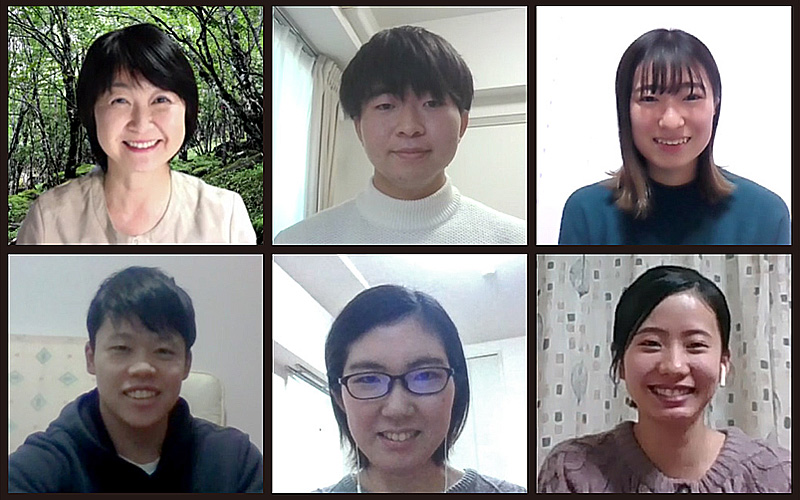
From left in the upper row, Professor ITO Shoko, Daisuke Suga (seminar leader), and Nana Sekiguchi; from left in the lower row, Raku Takashima, Yuka Iida, and Saya Kadoguchi *All are second-year students in the Department of Community Development, Faculty of Social Policy and Administration.
-
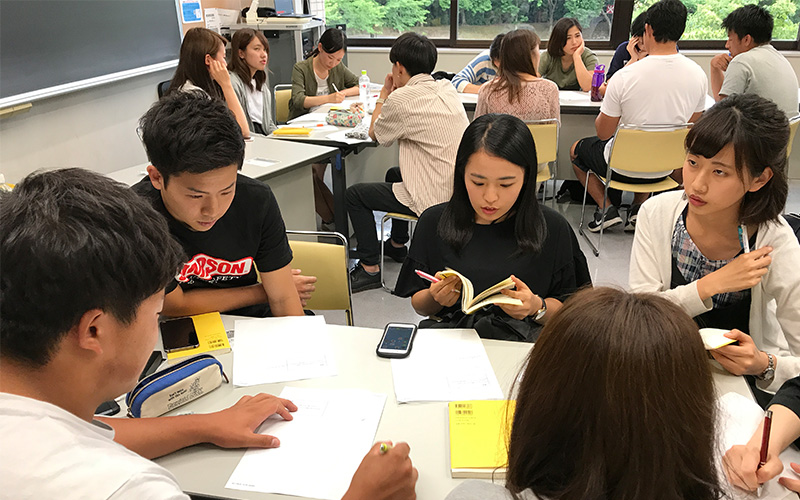
Group research. Members interested in the same theme form groups and conduct research while respecting each other's opinions.
-
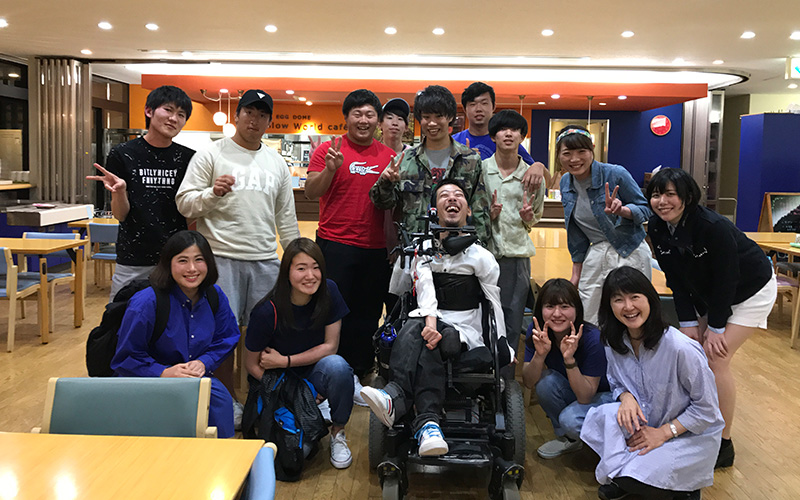
Guest speakers are sometimes invited to speak at special classes. The photo shows a social gathering held at the EGG DOME after the class.
-
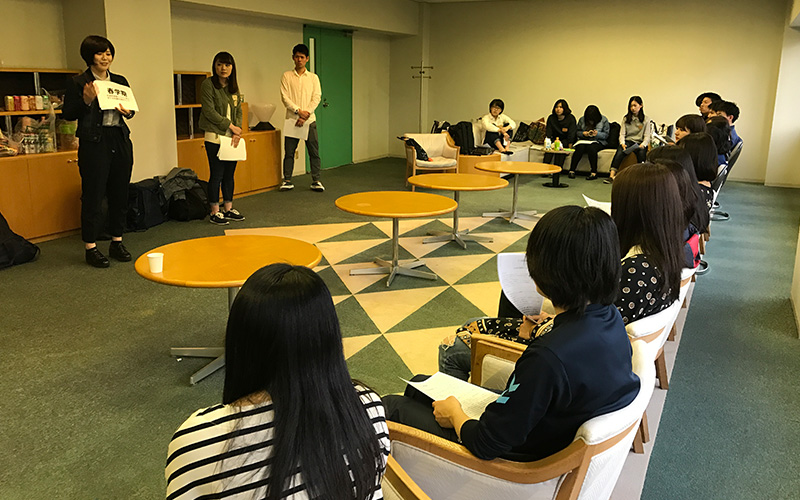
Multiple times a year, we provide opportunities for exchange across grade levels (cancelled in 2020). Photo shows a presentation of group research results at a joint camp during spring break