

Notices
A New You in an Unfamiliar Land: A Roundtable Discussion with Participants of Study Abroad in Japan [Part 2
- Feb 14, 2022
Hosei University has established an environment that allows students to study in different regions and at other universities, and has established a domestic study abroad program that recognizes credits earned in order to create opportunities for students to have diverse learning experiences amid the various impacts of the Corona disaster on educational activities. So far, the program has been implemented at the University of Okinawa, Meizo University (Okinawa Prefecture) and Hokkai-Gakuen University (Hokkaido, Japan). In FY2021, a new domestic study abroad program with Kansai University will be launched. A roundtable discussion with Hosei University faculty and staff was held with the three participating students, who are the first batch of students in the program.
Participants in the roundtable discussion

From left in the upper row: Shintaro Kodama, Natsuki Awaka, and Taiga Yoshimura; from left in the lower row: President HIROSE Katsuya, Vice President KOAKIMOTO Dan, Director of Academic Affairs Katsuhito KIKUCHI, and Director of the Student Affairs Division Yuko TAKANOHASHI
Differences between Kanto and Kansai sensibilities as seen through daily life
Director Kikuchi: What was your life like in your study abroad program?
Mr. Yoshimura: At first I had a part-time job, but now I am concentrating on studying bookkeeping because I want to become an accountant. However, since I am living in Tokyo, I enjoy riding my bicycle around the city for a change of pace. From Kagurazaka, where I live now, I can go to Shinjuku, Shibuya, Ueno, Akihabara, and anywhere else I feel like cycling.
Ms. Kodama: During my stay in Japan, I rented a room in a public housing complex in Senri New Town. I liked housing complexes in the first place, so I decided to take this opportunity to look for a place to live. I had heard that it was the first large-scale new town in Japan and that it had influenced the development of new towns throughout Japan, so I wanted to experience it firsthand. The building in which I lived was built as housing for people working in the pavilions of the 1970 Japan World Exposition, and I was deeply moved by its compact layout, which was suitable for a single person living for a short period of time.
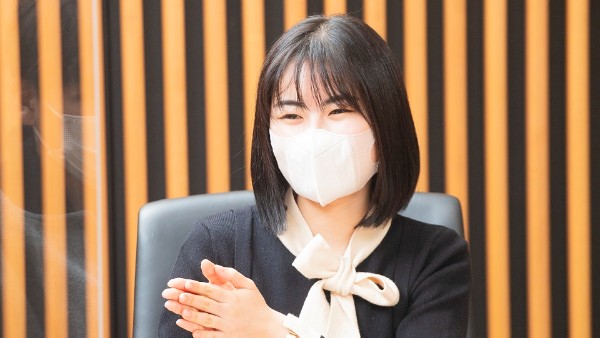
Ms. Awaka: I stayed in the student dormitory. Living together with people my own age and having my own private room suited my personality. I cooked for myself, but I often took advantage of the "100-yen breakfast" and "100-yen dinner" at the cafeteria in Kansai University. The menu changes daily and there is a wide variety of dishes, and they were very helpful.
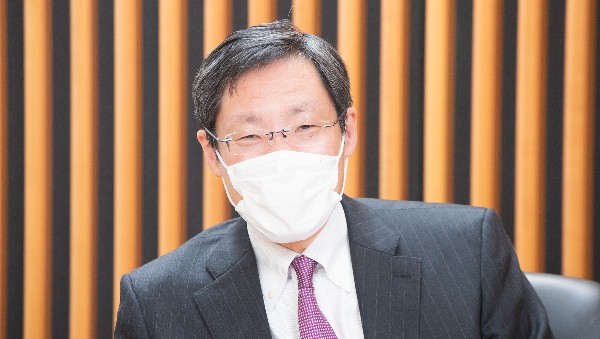
President Hirose: Having come from Kansai and having lived in both places, I can look back and say that the way of communication and regional characteristics are quite different between Osaka and Tokyo. I think this is a kind of cross-cultural experience.
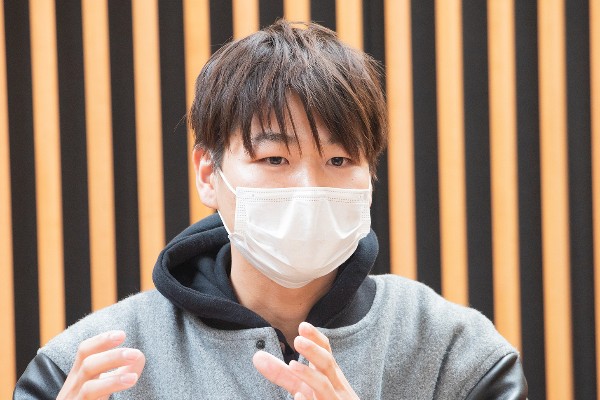
Mr. Yoshimura: I felt that the way of communication was completely different. Even if I tried to be silly in the middle of a conversation, I might not get the response I wanted, or a word I meant as a quip might annoy the other person. I also get teased a lot about my Kansai dialect (laughs).
Ms. Kodama: In Osaka, people seem to be very close to each other. Compared to the Ichigaya campus, which is located in the middle of a building district, the Kansai University campus has a large site and is more spacious. I was impressed by the natural blend between the university and the local community, with local residents taking regular walks around the campus.
Mr. Yoshimura: On the contrary, I found Hosei University's Ichigaya Campus interesting. Kansai University has separate buildings for each faculty, and they are located far apart from each other, so the only people who pass each other on campus are from the same faculty. At the Ichigaya Campus, where several faculties are mixed on campus, you can hear the conversations of people from other faculties just by walking around. There are also international students and the Faculty of Global and Interdisciplinary Studies, so it is easy to interact with foreign students. I thought that was fresh and attractive.
Vice President Koakimoto: Mr. Yoshimura, what are your impressions of living in Tokyo?
Mr. Yoshimura: Actually, there was a time when I lost my pace and found it hard to stay in Tokyo. Anyway, I made a solo trip to Sendai to get away once, and by calming down and thinking things through there, I was able to look back and realize that I was in a hurry to live.
President Hirose: Compared to your time in Kansai, you must have felt closer to Sendai.
Mr. Yoshimura Yes. I was surprised that it was closer than Osaka, about two hours from Tokyo by Shinkansen bullet train. Before I came to Japan, I thought that Osaka was the second largest city in Japan and there would be no particular differences, but when I actually lived in Sendai, I found that the rhythm of life, the people, and everything was far beyond my imagination.
A sense of security because we are in Japan, where there is no language barrier
Chief Takatakabe: After participating in the domestic study abroad program, what do you feel was the value of this program for the students?
Ms. Abaka: It was a good opportunity for me to learn about myself again, what I like and what I am not good at. In addition, the most valuable asset of the program was that I met friends whom I would like to be friends with for the rest of my life. When I returned to Tokyo, I promised them, "Whenever we want to start something in the future, we will call on each other. It is very reassuring to know that no matter what I do from now on, I have someone I can rely on.
Mr. Yoshimura When people think of studying abroad, they think of going abroad, but for someone like me who is not very confident in English, it is difficult to take on the challenge of a language barrier. If you study in Japan, at least you don't have to struggle with the language, so you can devote your time to concentrate on what you want to learn and what you want to do. I felt that is the beauty of studying in Japan.
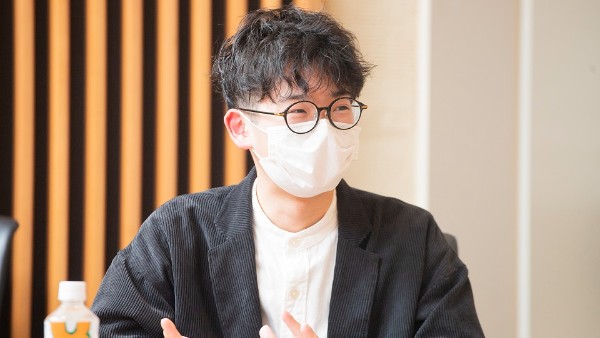
Ms. Kodama: Without a doubt, it was an event that will affect the way I live my life in the future. I had vague aspirations for employment and the future, but was unsure of what I should do. However, the professor at my study abroad program gave me advice from an objective standpoint, yet in a direction that made more use of my own curiosity. That encouraged me and gave me the opportunity to make many decisions. In the spring, I will be entering graduate school at Kyushu University, and I believe it was my study abroad experience in Japan that helped me make that decision.
Director Kikuchi: How did your families react to your participation in the study abroad program in Japan? I understand that this was the first time for you all to live alone.
Ms. Kodama They understood my desire to live away from my hometown, and when I went to study abroad, they sent me off, telling me that it would be a good opportunity. Since then, the way I talk to and interact with my parents has become more open. They began to talk to me at a moderate distance. I feel that I have to do my best for them.
Ms. Awaka: I am an only child, so my parents were a little worried. However, since the destination was in Japan and I could come and go as I wanted, it was a safe distance for my parents.
Yoshimura-san I am also an only child, but my parents wanted me to be on my own as soon as possible, so they supported me in this study abroad program. However, when I actually lived on my own, I realized how much I appreciated living with my family and how grateful I was to my parents.
I would like to continue to expand the circle of international students in Japan
Chief Takatsukake Finally, please give us a few words from the university side.
Mr. Kikuchi: After listening to what you have said today, I would like to reiterate the importance of domestic study abroad as a university. I felt once again the significance of promoting study abroad in Japan as a university. Even when you study abroad in Japan, you can make many new discoveries and gain valuable experience. I believe that it is a good opportunity to realize what you want to do.
Vice President Koakimoto: I was impressed by the fact that everyone here has a clear sense of purpose in their university life. I think it is wonderful that you have set a number of goals and are achieving each of them. I have heard good things from you today. Thank you very much.
President Hirose: I hear that the trend among private universities is that fewer and fewer students from the Kansai region are going on to higher education in the Tokyo metropolitan area, and fewer and fewer students from the Tokyo metropolitan area are going on to higher education in the Kansai region. In the sense of resolving such "remoteness," I am once again convinced that there is great value in having students from Kansai University and Hosei University exchange and study together. We at the university would like to support this program so that the number of participants will continue to expand over the next two or three terms.
Mr . Tatsukabe: Hosei University has realized student exchange programs with the University of Okinawa, Meio University, and Hokkai Gakuen University. In parallel with this movement, in September 2017, we concluded a "collaborative cooperation agreement to strengthen ties in education, research, and student exchange" with Kansai University, and have been working to institutionalize the mutual dispatch of students to each other. We were very cautious in proceeding with this program only because of the Corona Disaster, but we are happy to see the domestic study abroad program with Kansai University finally get underway. Based on your opinions, we will strive to further enhance the content of the domestic study abroad program in the future. Thank you very much for your time today.
Thank you very much .

At the 26th floor of Boissonade Tower, Ichigaya Campus