

PickUP
Hosei's Research Brand vol.3] How have traditional festivals been handed down to the present day - What eight years of fieldwork and participatory observation have revealed - (Professor TAKEDA Shunsuke, Department of Sociology, Faculty of Social Sciences)
- January 13, 2021
Hosei's Research Brand" Series
At Hosei University, fascinating and stimulating research is being produced every day that will be the frontrunners in the future of society and the world.
This series of articles and videos will tell the story of Hosei's brand of research.
A New Perspective on Urban Festivals
In April 2020, I arrived at Hosei University as a professor in the Faculty of Social Sciences amidst the Corona disaster. My main research interests include cultural sociology, urban sociology, regional sociology, and media theory.
In April 2019, his academic book "Urban Festival as Commons: Urban Sociology of the Nagahama Hikiyama Festival" (Shinyosha), which discusses the Nagahama Hikiyama Festival held every April in Nagahama City, Shiga Prefecture, and the social structure of the local city that supports the festival from an urban sociological perspective In fiscal 2019, the book received the 13th Japan Society of Regional Sociology Award (individual book category) from the Japan Society of Regional Sociology, and in fiscal 2020, the 46th Fujita Award from the Goto-Anda Memorial Tokyo Institute of Urban Research. In addition, the doctoral dissertation on which this book is based received the 5th Japan Society for Lifestyle Studies Doctoral Dissertation Award from the Japan Society for Lifestyle Studies. These are some of the results of research that I worked on at my former school, the University of Shiga Prefecture.
First of all, I think it is necessary to explain what the "commons" is, which is also mentioned in the title. In the commons theory, we sometimes focus on the resources themselves, but in this study, we define the commons as a "management mechanism" of resources and benefits, in which the cycle of procuring resources from stakeholders, generating scarce benefits from them, distributing them to stakeholders, and then procuring resources again is carried on. The "management system" of resources and usufructs is defined as "a system for managing resources and usufructs. The "Nagahama Hikiyama Festival" is a "commons," or in other words, the mechanism by which a historic festival is passed down from generation to generation in the modern age.
What, then, is the "scarcity" of usages in the Nagahama Hikiyama Festival? It is "honor and prestige" for the families living in the town. For example, a child from one's own family is chosen to play a role in the "Children's Kabuki" (Photo 2). Only a few children are chosen each year, and only one or two more of them get to play the lead role or heroine. The rare honor has to be allocated in a judicious way.
In the first place, in order to hold a festival and distribute the honor and prestige to each family in the town, a large number of resources such as people, goods, money, and skills are required. To be more specific, a float with a stage called a "hikiyama" must be built (Photo 3), musicians called "shagiri" must be trained (Photo 4), and kabuki experts must be brought in to instruct the choreography of the performers. Naturally, such activities require funds and manpower, which must be borne by each family in the town. All of these resources must be properly procured, and through them, benefits such as honor and prestige must be appropriately generated and distributed. And because they believe that honor and prestige will one day be passed on to their own homes, the town's residents provide both money and manpower.
In the postwar period, such resource shortages became more pronounced as the town center declined and it became more difficult to raise funds, and as the birthrate declined and the population aged, there was a shortage of manpower. In such a situation, it is necessary to find a place to procure resources, including those outside the town, and to do so, it is necessary to create and distribute a profit that is different from the one for the town. For example, the government can be asked to subsidize the festival in exchange for its use as a tourism resource, citizens can be offered the pleasure of participating in the festival as volunteers, and elementary and junior high schools can be offered the festival as a source of local education while asking for public holidays so that their students can participate in the festival. This is the beginning of the process. The challenge for those involved in the festival is thus to expand the various networks within the community and to manage the cycle of procurement of resources and production and distribution of usufructs.
-
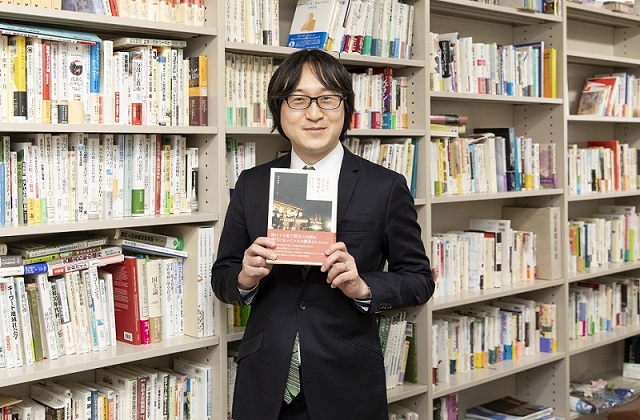
Photo 1: The award-winning work "Urban Festival as a Commons: Urban Sociology of the Nagahama Hikiyama Festival
-
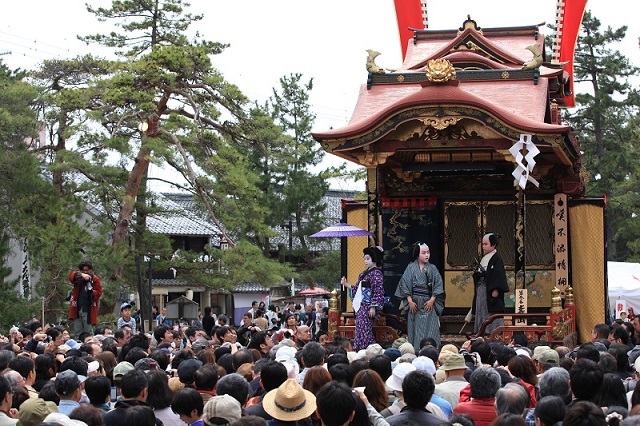
Photo 2: Children's Kabuki at the Nagahama Hikiyama Festival
-
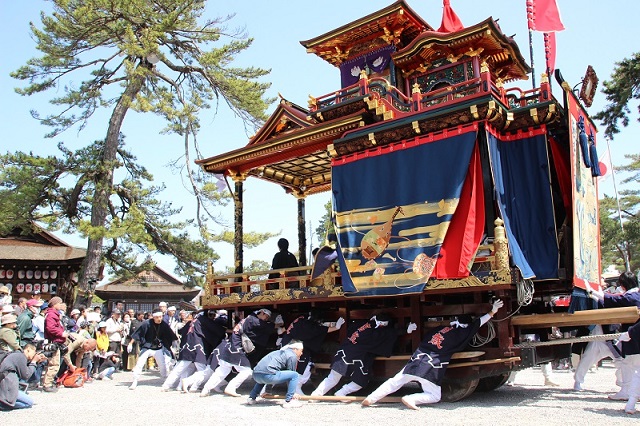
Photo 3 Floats called "Hikiyama
-
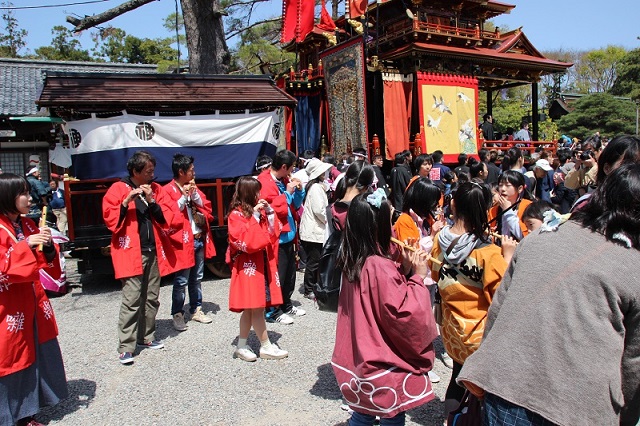
Photo 4 Shagiri children
The structure of local cities revealed through participatory observation
To conduct this research, I joined one of the 13 groups in 2012 as a wakashu (young male member) and have been involved in the Nagahama Hikiyama Festival as an actor who takes care of the children actors and a musician who plays the flute, while conducting fieldwork on the festival (Photo #5). As a result, I believe that I was able to clarify the structure of the local city that is created through the festival by viewing this urban festival as a "commons.
The fieldwork revealed that in the process of allocating scarce honor and prestige, there are always violent conflicts over the distribution of honor and prestige, which are very important for the succession of festivals. Some families have lived in Nagahama for generations since the Edo period or even before. Such families with a long history have invested a great deal of money, manpower, and time since that time, and naturally expect to be rewarded for their efforts, such as the honor of having their sons selected to play a role.
The men can still participate in the various events of the festival and enjoy drinking with other young people, but for the mothers who support the festival behind the scenes, the only thing that makes them happy is the fact that their sons will be cast as actors. So, they would say, "Why didn't you choose our son? We have been holding the festival for 200 years! Some mothers were so angry that their sons were humiliated that they stood in front of the floats and blocked the way, saying, "Run over me before you go! and obstructing the procession. At festivals, such claims to honor, anger and sadness at not being able to obtain such honor, as well as pride and self-aggrandizement are all intermingled, and every time there is a conflict, it happens.
However, it is not appropriate to view these conflicts as mere obstacles to the festival. Rather, they bring thrills and excitement to many people in the town and make the festival more exciting. I explained earlier that festivals are an allocation of honor and prestige, but in fact, they are not something that all houses can gain. For example, a house that has no sons who are of the right age to play a role will not receive such an allocation. However, all houses can enjoy the entertainment of these conflicts. This is what makes festivals so interesting and different from events that are required to proceed according to a predetermined schedule.
Furthermore, the memories of these conflicts are passed down from generation to generation, which is why each house continues to carry on the festival into the future. As mentioned earlier, the people of the town have spent a great deal of money and time for this festival from generation to generation. The reason for this is the expectation that one day an actor will be chosen from their own family tree. They experience various conflicts related to the selection of actors, which are repeated every year, and the families that are not selected as actors spend money and time for the next year and the next, hoping to one day make up for the anger and sorrow they have caused. Once they stop participating in the festival, there will be no honor or prestige allocated to their family lineage forever. That is why we cannot stop. This expectation and persistence that someday the honor will return in return for the resources is what keeps the festival alive.
-
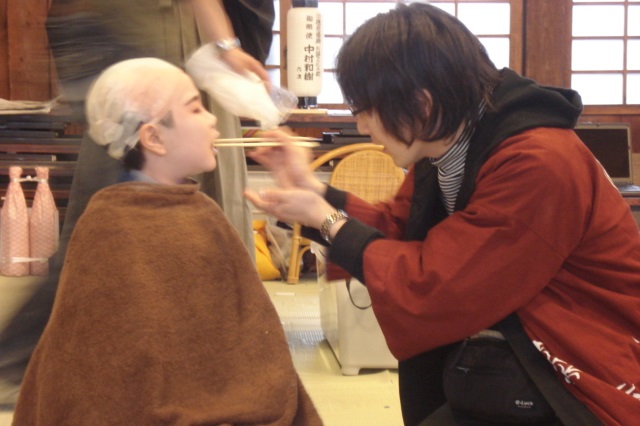
Photo5: Professor Takeda taking care of actors as a young lad
-
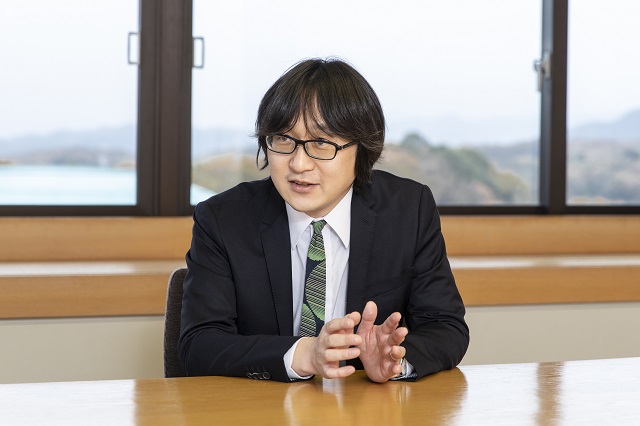
Photo 6: Professor Takeda talking about his eight years of fieldwork and observation
Becoming aware of diverse "ways of life" through fieldwork
I am currently conducting research on local communities based on the kind of fieldwork I have described so far, and there are three things I would like to convey to university students from this perspective.
First, you should not limit your own possibilities. In fact, before I started this research, my own research style was mainly historical literature research, and I did not think that I would be able to practice fieldwork or participatory observation, in which I would go to the site and dive in. I have written an article and a book about the Nagahama Hikiyama Festival, the result of eight years of close on-site observation, and it has received a certain amount of acclaim, which people who only know me now would not believe, but I am keenly aware that you never know your own suitability from the beginning. I was first sought out by the people of Nagahama, and I found my own aptitude as a result of my persistent efforts to live up to their trust.
Secondly, I hope that through fieldwork, you will come face to face with different cultures and ways of thinking that you may not have known or thought of. Every year, my students participated in the research of Nagahama, including the Hikiyama Festival, and I believe that what they saw was a completely different culture. In Nagahama, there is a strong desire to carry on the traditions of ancestral homes and festivals, and there is an abundance of residents' awareness of the importance of planning and enjoying events in these places while preserving the historic townscape and the environment of the river that flows through it. It is difficult for students to imagine such a local community with the awareness and desire to enhance their own lives, and they should be able to realize that there is such a world and such a way of life in Nagahama. Not only in Nagahama, but depending on whether or not such realizations and discoveries are made, the range of one's own thinking and life choices may be completely different.
Third, when conducting fieldwork in a local community, you should not only be a beneficiary, but also be aware of what you can do to be recognized as a member of the community and what you can contribute there, no matter what form that may take. In my case, it was to contribute to the festival as a wakashu, and through my research, to provide material for the people of the town to consider the future of the festival. Students also participated in the "nakazari," or naked visit, to pray for the success of the festival, learned to play the shinobue flute at the festival, gave local presentations, and co-authored a book for which I was a co-editor.
However, in such cases, saying something pleasant to the ear is not necessarily the only way to contribute. Rather, when I take students to visit the central city area of Nagahama, the Trustee of the Federation of Shopping Centers often says, "I want you to criticize me when I write my report. Nagahama is a town known for its tourist town development of glass culture by Kurokabe Corporation, but we are used to hearing reports that it is simply a success. What is lacking in this town? What kind of issues does the town need to address? In other words, they are expected to play the role of making good-faith critiques from an outside perspective. To do so, it is necessary not merely to make superficial observations, but to understand and respect the good qualities of the local community and the way of thinking of its people, and to raise issues along with its unacknowledged charms. Nevertheless, in order to provide criticism that reaches the ears, it is necessary to build a relationship of trust for this purpose, and for this reason I believe it is important to conduct fieldwork while being conscious of understanding and contributing to the local community in order to be recognized for our existence.
Unfortunately, the Corona disaster has prevented us from conducting fieldwork as much as we would like, but we will use our existing network to connect with the central city of Nagahama via the web conferencing tool "Zoom" to hear directly from local people, and then connect with them via smartphone to tour the city and museum while conducting a Q&A session. In December, we held a seminar activity called "The Field Trip to the City of Nagahama," in which we visited the city and museums and asked questions. Of course, when you are able to go, I would like you to actually conduct field research in the form of fieldwork. I am looking forward to conducting such a survey with the students of this university as soon as possible!
Professor TAKEDA Shunsuke, Department of Sociology, Faculty of Social Sciences
Born in 1974. D. in Sociology from the Graduate School of Humanities and Sociology at the University of Tokyo. D. in sociology. Specializes in cultural sociology, regional sociology, urban sociology, and media studies. In addition to his prize-winning works, he is the author of "Nagahama Hikiyama Matsuri no past to genzai: Matsuri rites and the dynamism of performing arts succession" (co-editor, Ohmi Academic Press, 2017), "History and Sociology: Materials, Representations, Experiences" (co-author, Minerva Shobo, 2015), "Min'yo kara mita sekai music: Songs from the World Music from Folk Songs: Exploring the Ground of Songs" (co-authored, Minerva Shobo, 2012), etc.