

PickUP
Mimicking Biological Mechanisms with Electrical and Electronic Circuits Aiming to Contribute to Society in the Field of Medical Engineering (Professor TORIKAI Hiroyuki, Department of Electrical and Electronic Engineering, Faculty of Science and Engineering)
- May 19, 2020
Faculty of Science and Engineering Department of Electrical and Electronic Engineering
Professor TORIKAI Hiroyuki
Professor TORIKAI Hiroyuki is working on the design of electrical and electronic circuits that mimic the function of living organisms. By artificially creating ear and brain functions, he aims to realize the creation of systems that reduce inconvenience.

Designed circuits that artificially mimic the functions of the inner ear and parts of the brain.
I am continuing my research on electrical and electronic circuits ("circuits"). Currently, I am involved in the design of large-scale integrated circuits (VLSI)* that mimic the mechanisms of living organisms, with a particular focus on the "ear" and "brain.
I have been interested in circuit design since I was a teenager, and was engaged in research to deepen basic theory. However, a turning point came when I learned of research at an international conference I attended in 2005 that attempted to use ICs to replace some of the functions of the brain. He realized that the research he had been engaged in for many years could be utilized in the applied field of medical engineering.
One of the results of the circuit design is the cochlear implant. The inner ear, the innermost part of the ear, is an important organ for sound perception. It converts sound information from the outer ear into electrical signals and transmits them to the brain. By reproducing this function using large-scale integrated circuits, it is possible to restore sound to people who have lost their hearing due to inner ear abnormalities.
Cochlear implants have already been put to practical use and have evolved to a level where it is possible to have a conversation with a person. However, the nature of the sound is not as clear as it could be. We are working to improve the accuracy of the cochlear implant to make it even easier to hear, and to bring its performance close to that of the original human ear (see Figure 1).
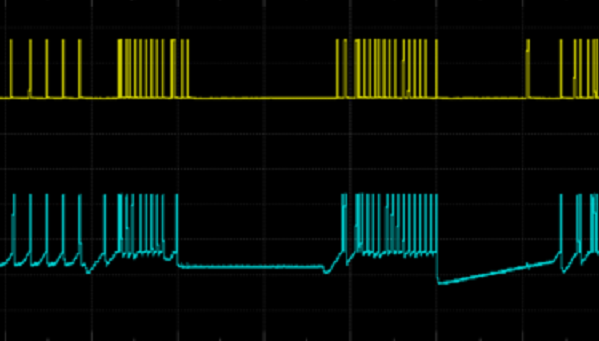
As for the brain, the mechanism is complex, as it is a central function, and it is physically difficult to cover everything with a single device. Therefore, we have created a versatile platform that can be used for multiple purposes, and we are considering a mechanism to substitute a part of the brain by reconfiguring the circuits. In particular, we are focusing on the function of the hippocampus, which is responsible for memory and spatial learning in the cerebrum (see Figure 2).
Research on artificially mimicking the function of the hippocampus in the brain is being conducted on a global scale, mainly in the United States. At the international conference in 2005, which marked a turning point for me, experiments were conducted on rats, but in 2018, basic experiments for clinical use were conducted on people with brain disorders, and the results of verification, which confirmed a slight improvement in brain function, were announced.
Further research will be conducted in the future with the aim of practical application. Since there is ample room for improving performance through circuit design innovations, we are conducting advanced research in anticipation of future demand.
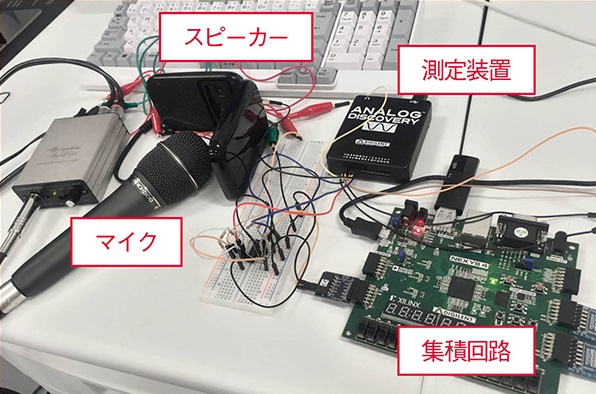
- Figure 1: Experimental setup for cochlear implant circuit design. A measurement device is used to check whether the sound picked up by a microphone from a speaker is correctly converted into an electrical signal.
- Figure 2: Measured image of the artificial hippocampal circuit. Using a device that shows the function of the hippocampus in the brain as a waveform, we compare the data obtained in animal experiments with the data generated by the circuit and bring them closer together.
Supported by a great deal of wisdom, he creates ingenuity and wisdom
My career as a researcher began at Hosei University. Along the way, I built up my career in the Kansai area and returned to my alma mater in 2018. The Koganei Campus, which I have attended since my student days, has been redeveloped and the school buildings have changed, but I feel that the atmosphere of the students has not changed much.
I am inspired by the many laboratories on the Koganei campus that compete with their ingenuity and wisdom. I am grateful for the research environment at Hosei that supports such a research style.
Mimicking biological functions cannot be achieved only with knowledge of electrical and electronic engineering. It is necessary to understand the mechanism of the function to be imitated and to know in detail how it affects cells, nerves, etc. in the body. To do this, it is essential to have the results and measurement data left behind by researchers in many fields of biology and medicine. We hope to bring together the wisdom that researchers have accumulated in their respective fields and make it useful to society.
I hope that you will accumulate basic research and become a top-notch engineer.
If we can mimic the function of biological functions exactly, we can artificially create biological functions. This has the potential to be applied not only to medical engineering but also to various other fields.
In our laboratory, students are also involved in applied research.
In an effort to develop an electronic brain for a robot, they designed a circuit that mimics an insect's brain and succeeded in making a hexapod robot move like an insect.
Some students worked on the design and development of a "gene simulator" for use in the fields of genome medicine and genome drug discovery, where genetic information is used for treatment. The simulator reproduces the function of genes and proteins in cells, so it is possible to simulate in advance how a drug administered will act on a specific gene.
In order to utilize such applied research as "Practical wisdom" that is useful to society, it is important to accumulate basic research and strengthen the foundation of knowledge. Without a solid foundation, flexible applied knowledge cannot be applied.
In recent years, the research activities of other countries, such as China and India, have been remarkably active, giving the impression that Japan's research capabilities have been relatively buried. From now on, research fields will become more diversified and internationalized. In order to demonstrate Japan's research capabilities, I feel that there is an urgent need to foster excellent engineers and researchers. I would like to endeavor to play a part in this effort.
*Large-scale integrated circuit: A circuit in which a large-scale electronic circuit consisting of countless elements, mainly semiconductors, is mounted on a substrate; also called VLSI (Very Large Scale Integrated circuit).
(First published in the April 2020 issue of the public relations magazine "Hosei")

- Summer camp is held jointly by undergraduate and graduate students, with third-year students working hard on circuit design training to improve their basic skills, and senior students presenting their ongoing research.
Faculty of Science and Engineering / Department of Electrical and Electronic Engineering
Professor TORIKAI Hiroyuki
Born in Hyogo Prefecture in 1973. Graduated from the Department of Electrical Engineering, Faculty of Science and Engineering, Hosei University, and completed the master's and doctoral programs in electrical engineering at the Graduate School of Engineering, Hosei University. D. in Electrical Engineering. After working as an assistant at the Department of Electrical and Electronic Engineering, Faculty of Engineering, Hosei University, an associate professor at the Graduate School of Engineering Science, Osaka University, and a professor at the Faculty of Computer Science and Engineering, Kyoto Sangyo University, he was appointed as a professor at Hosei University in April 2018. He has been in this position up to the present.