

Notices
Eco-Tour to Discover the National Astronomical Observatory of Japan (Mitaka) with a Focus on Discovery" to challenge the core research of Japanese astronomy (Friday, March 18, 2022)
- Mar. 29, 2022
- Events and Occasions
Hosei University established the "Environmental Charter" in 1999 as a statement and declaration of its determination to solve global environmental problems, and in 2017 established the "Hosei University Environmental Management System (EMS)" covering Ichigaya, Tama, and Koganei to realize a "sustainable global society" through the proactive participation of students The EMS will be implemented by Hosei University in the following year.
On Friday, March 18, 2022, the Hosei University Environmental Center organized the "Eco-Tour to Discover the National Astronomical Observatory of Japan", a research institute that plays a central role in Japanese astronomy.
On the day of the tour, Mr. Akio Koike, a member of the Astronomy Information Center of the National Astronomical Observatory of Japan, introduced the history of astronomical research at the National Astronomical Observatory of Japan, and took us to the National Tangible Cultural Properties such as the "First Equatorial Mountains Room," "Historical Hall of the Observatory (Large Equatorial Mountains Room)," "Museum of the Equatorial Equatorial Mountains (Repsoldo Equatorial Mount)," "Gautier Equatorial Ring Room" and "Solar Tower The tour focused on the "Solar Tower (Einstein Tower)" and "Telescope (Einstein Tower)".
This time, the tour took us to the "First Equatorial Mounting Room," which houses the 20cm telescope that was used for sunspot sketching observations for 61 years from 1938, the "Observatory History Hall (Large Equatorial Mounting Room)," which houses the 65cm refractor, the largest aperture refractor in Japan, the Subaru Telescope, and the 45cm telescope at the Nobeyama Cosmological Radio Observatory. The "Exhibition Room," where models of the Subaru Telescope, the 45-meter radio telescope of the Nobeyama Radio Observatory, and the ALMA Telescope are on display, were opened to the eco-tour participants.
In the "Exhibition Room," the interferometer-type gravitational wave antenna "TAMA300," which is an important research result in "gravitational wave astronomy" that detects gravitational waves emitted from celestial phenomena in which huge masses are violently moving and changing to get to the core of the phenomena that cannot be observed by other means, was displayed. The Solar Physics Satellite HINODE, which was developed under international cooperation between Japan, the United States, and the United Kingdom and is still in service, and the next-generation optical-infrared Very Large Telescope (TMT), which is being constructed under international cooperation between Japan, the United States, Canada, China, and India, are the latest research achievements of the National Astronomical Observatory of Japan. The latest research achievements of NAOJ, including the TMT (Thirty Meter Telescope), a next-generation optical-infrared astronomical telescope under construction in cooperation with the National Astronomical Observatory of Japan, were introduced using models and panels.
In the "Eco-Tour of Discoveries at NAOJ," we had an opportunity to listen to a commentary directly from a staff member of NAOJ, who accepted our visit despite the coronal disaster.
The tour was a very valuable opportunity for us to explore the mysteries of our planet Earth by tracing the history of astronomical observations and astronomical research that led to great discoveries about planets and fixed stars far away from Earth.
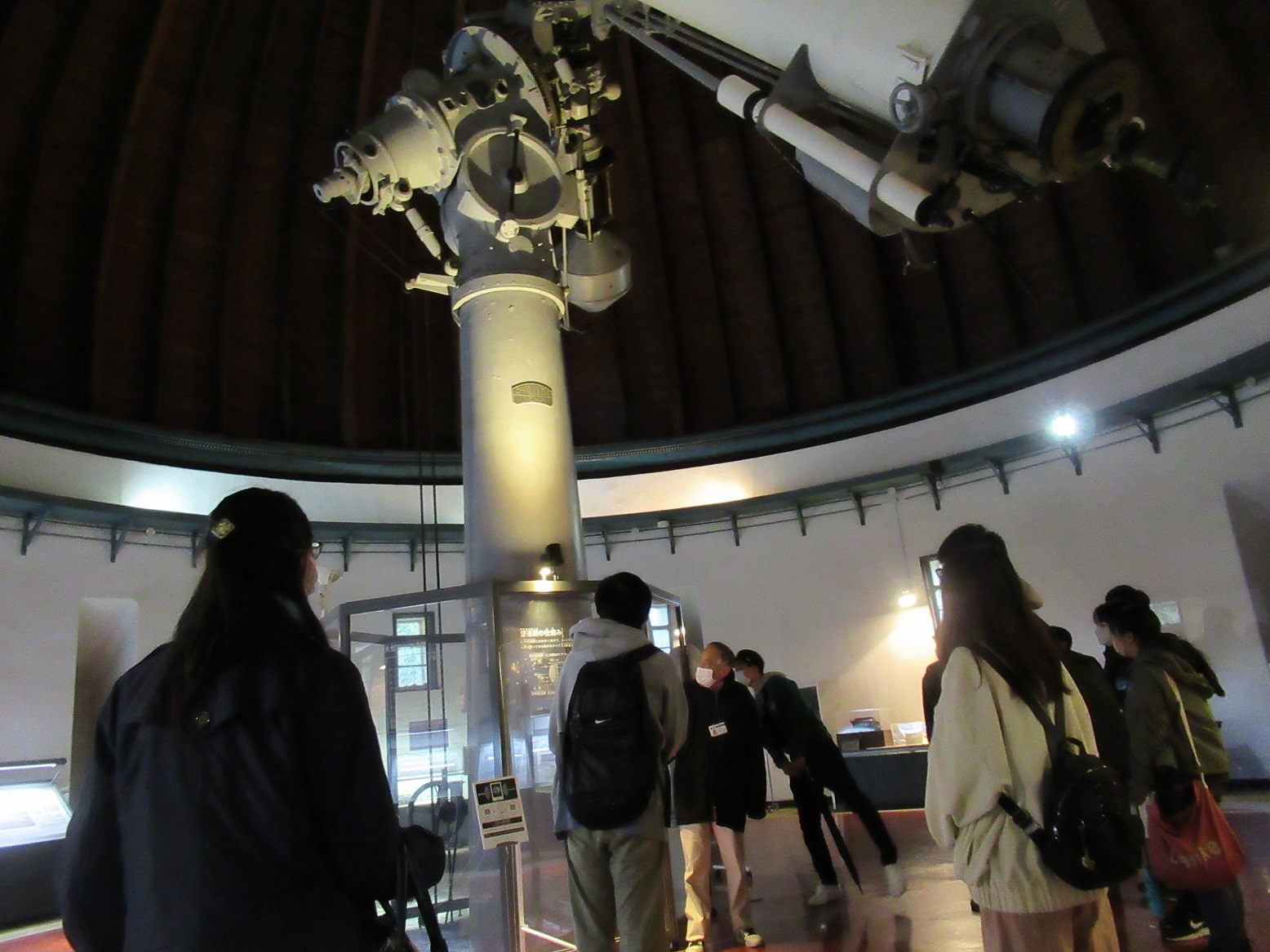
The "65cm refracting telescope," the largest aperture refracting telescope in Japan, has been used mainly for observing the positions of stars. This time, the inside of the "Observatory History Hall (Large Equatorial Mounting Room)" was specially opened to the public.
-
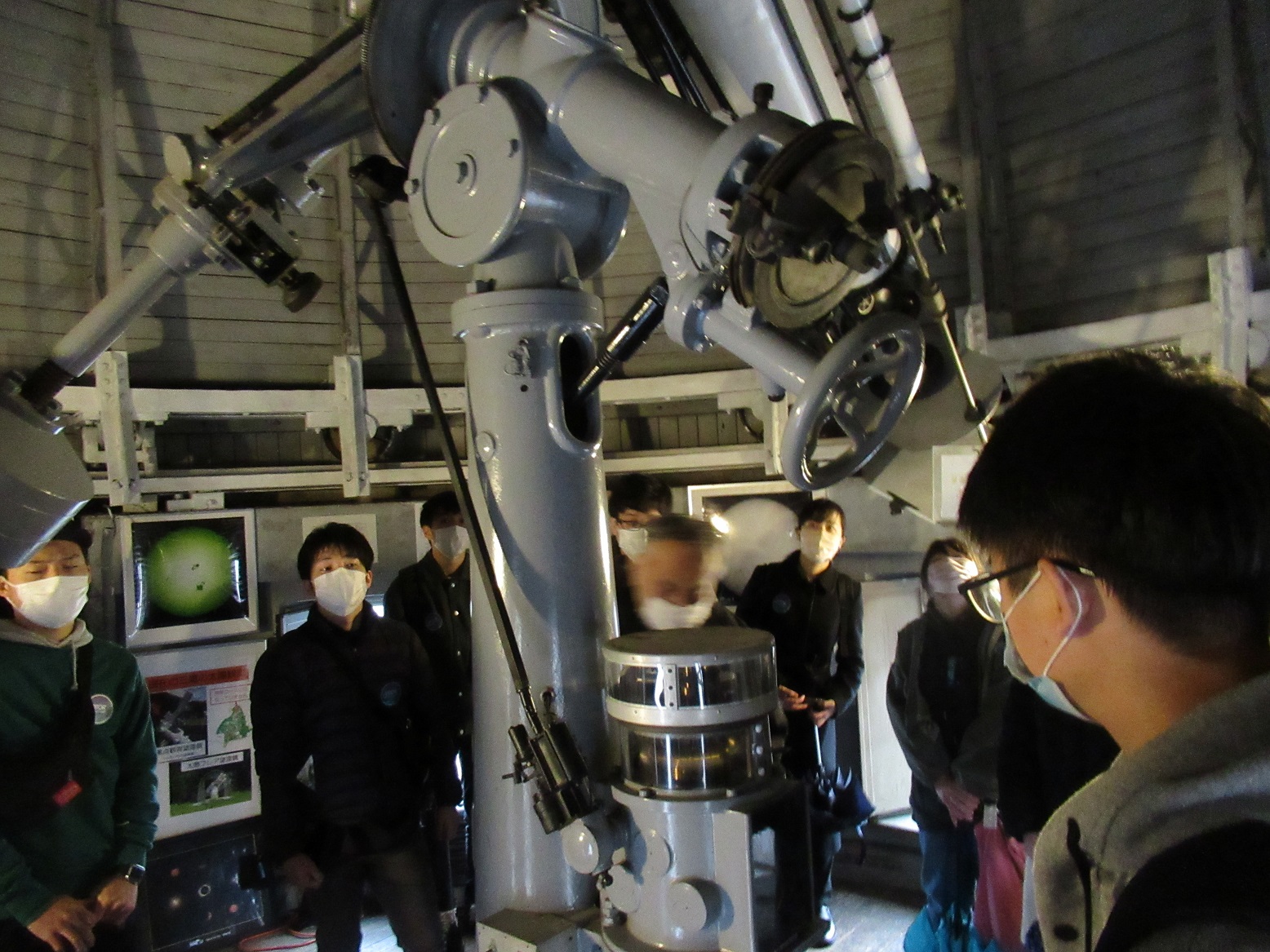
In the "First Equatorial Mount Room," he explained about sunspot sketching observation by operating a 20cm telescope and a weighted clock-driven equatorial mount (governor type).
-
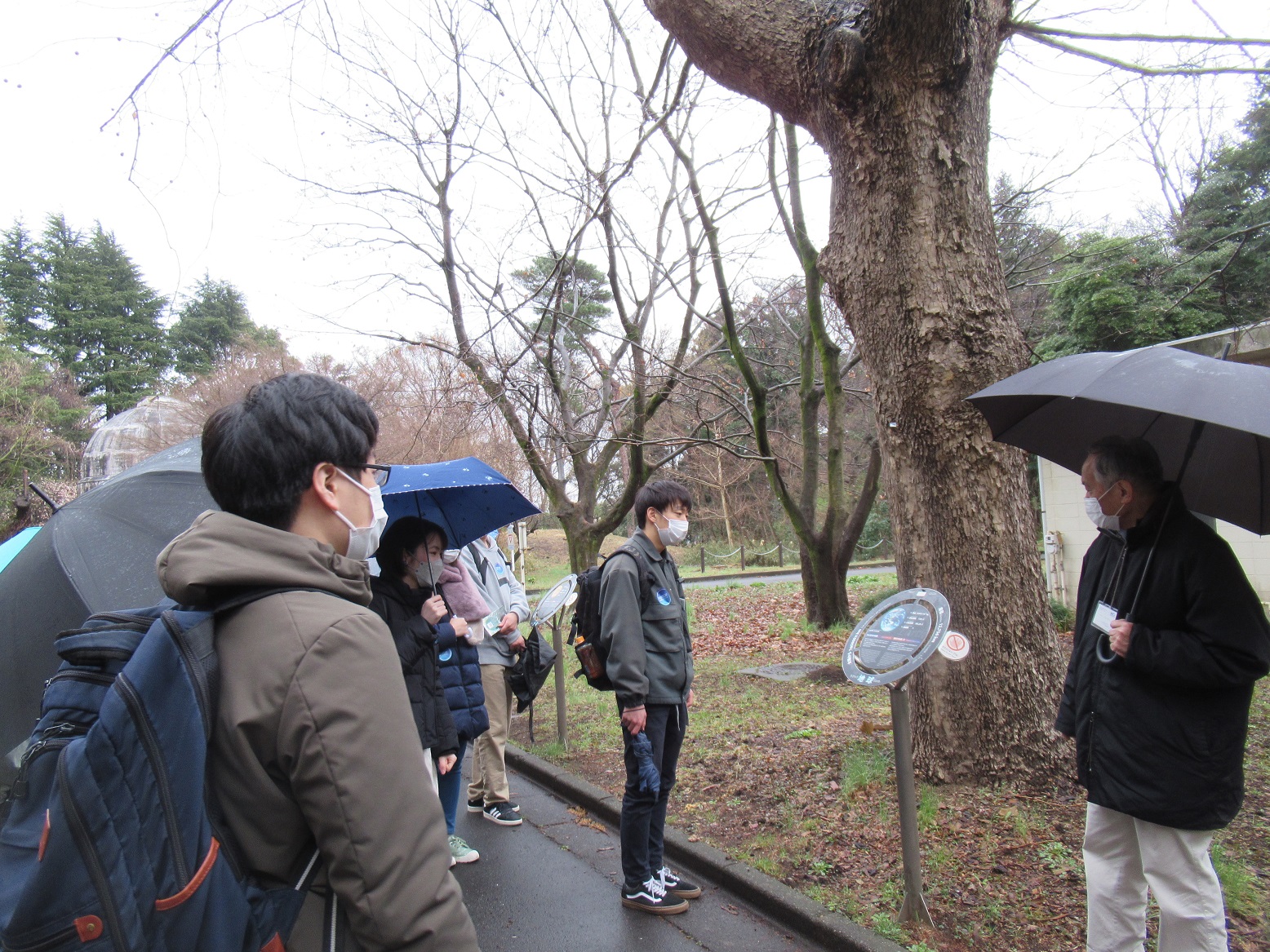
The "Solar System Walk" condensed the size of the solar system to 1/14 billion and the characteristics of each planet into a distance of about 100 meters.
-
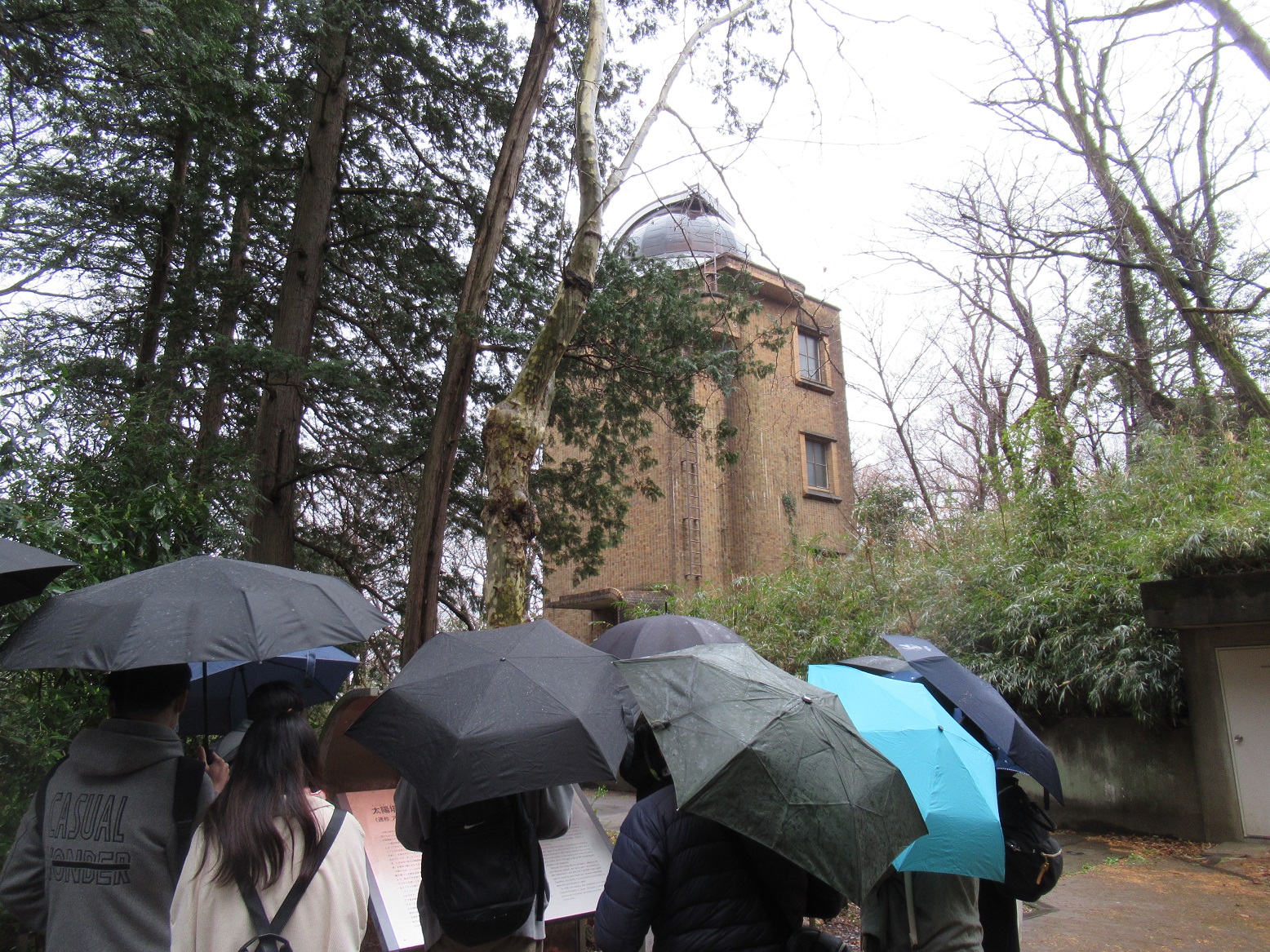
The "Solar Tower Telescope (Einstein Tower)" was built to observe the light of the sun and to confirm physicist Dr. Albert Einstein's theory of general relativity.
-
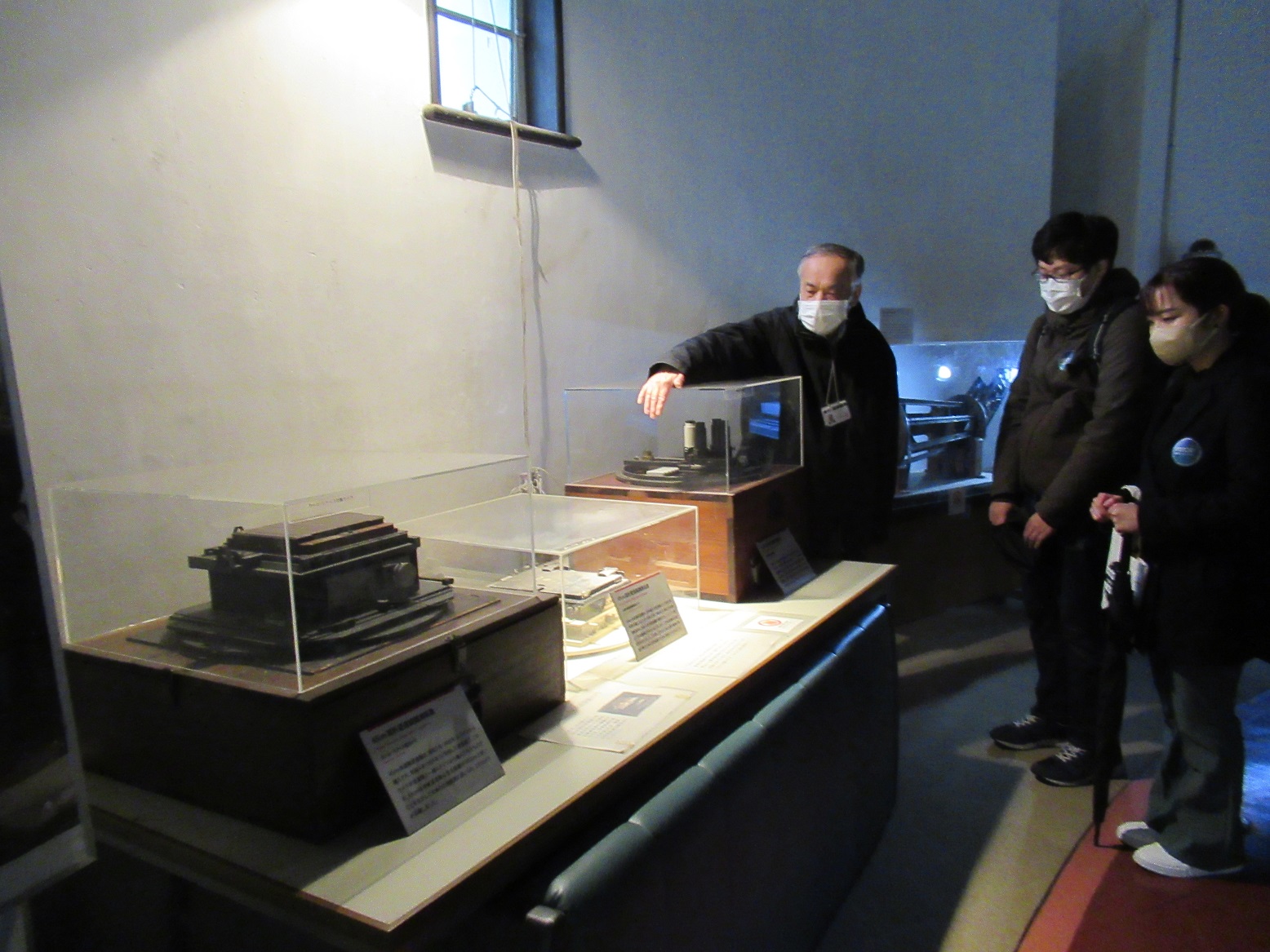
In the "Observatory History Hall (Large Equatorial Mount)," visitors were given explanations about the characteristics of the equipment used for observations in the past.
-
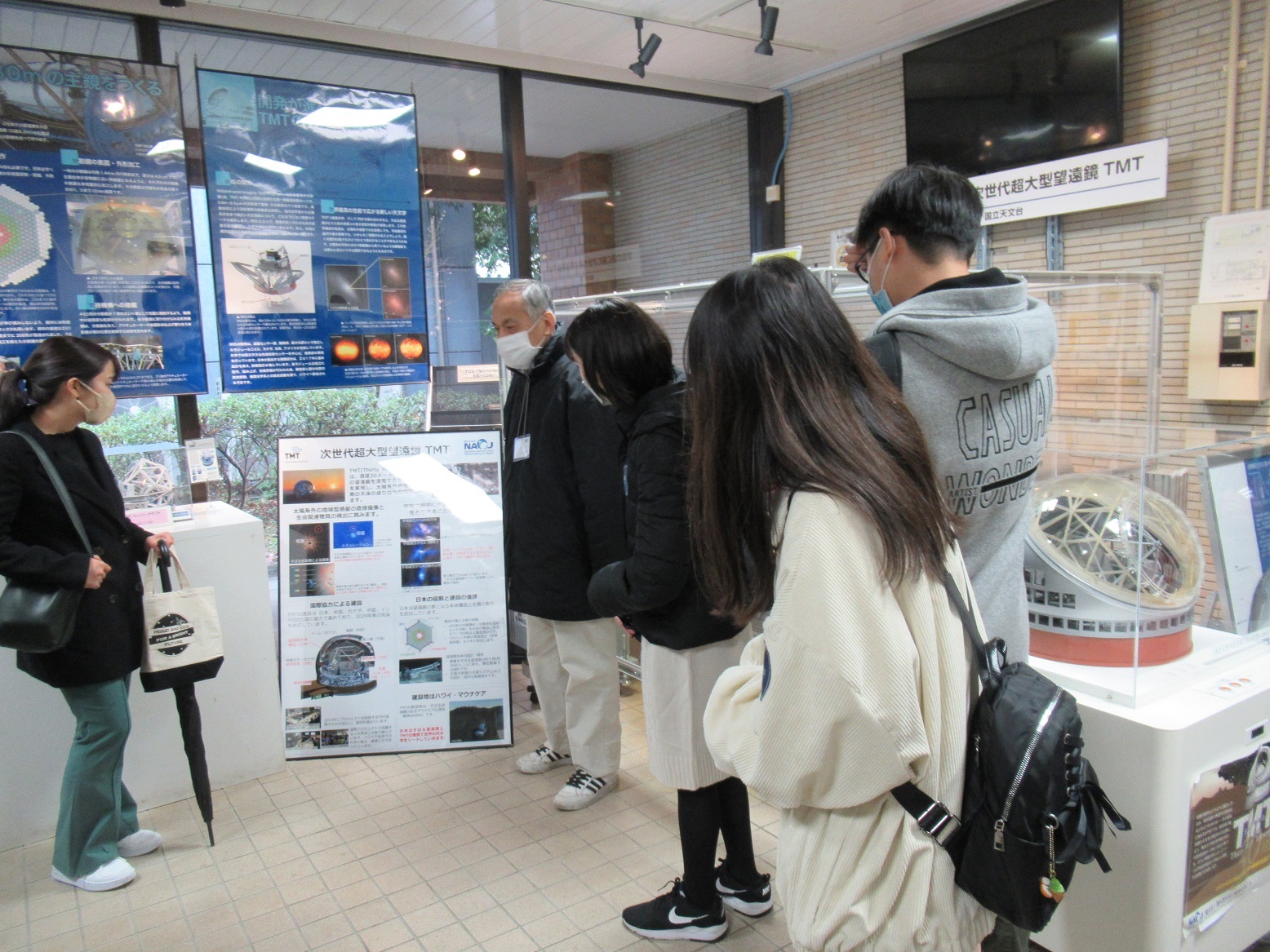
When completed, the "TMT (Thirty Meter Telescope)" will provide unprecedentedly high resolution and sensitivity.
-
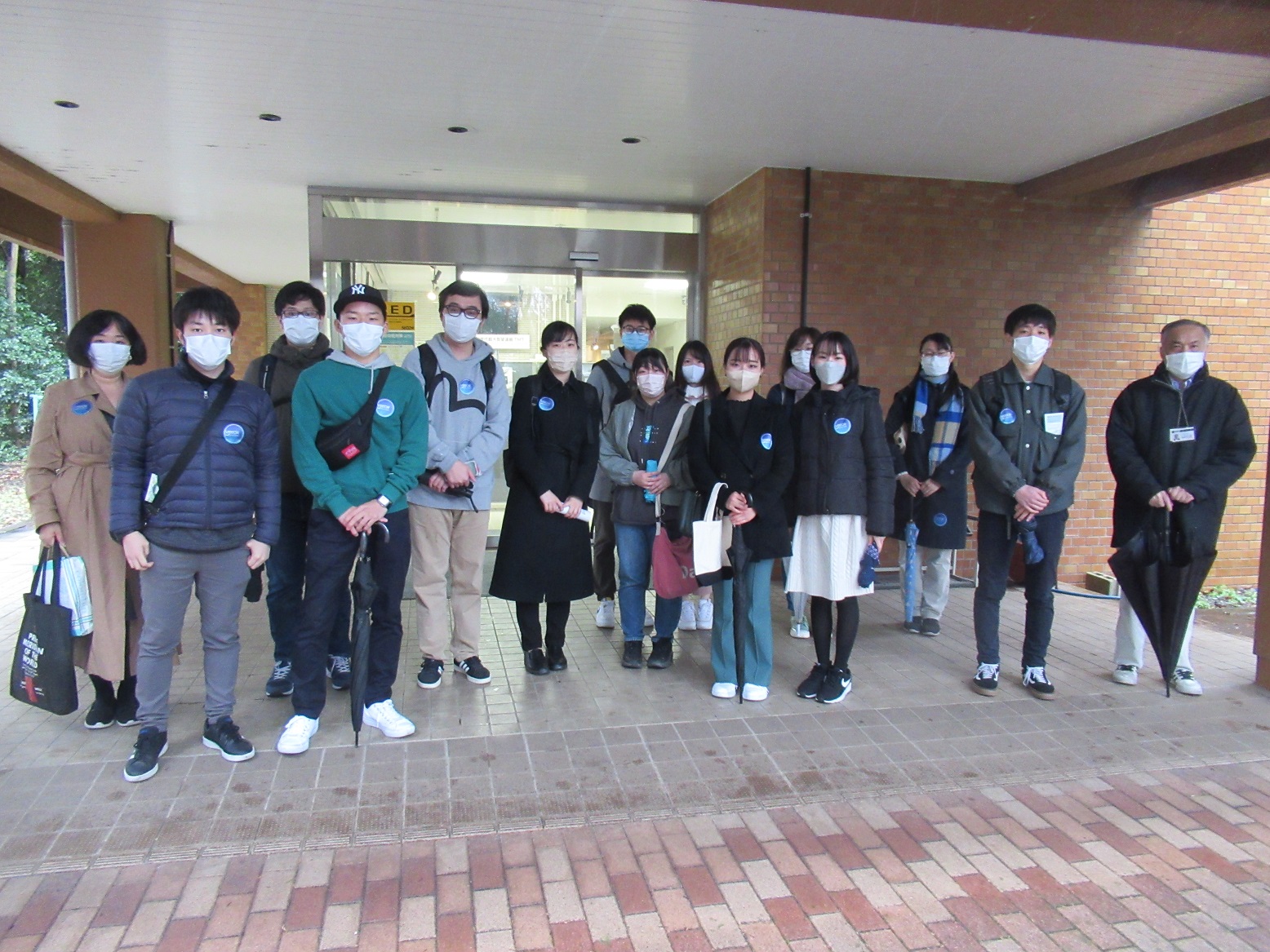
After listening to the explanation about the latest research results related to NAOJ, we took a "commemorative photo" in front of the "Exhibition Room. From the participants' questionnaires, we learned that the limitations of the telescope technology utilized until a quarter or half century ago teach us humans, that the technological development of next-generation telescopes may lead to the discovery of new stars, and that they have high expectations for the creation of new businesses through astronomy.
-
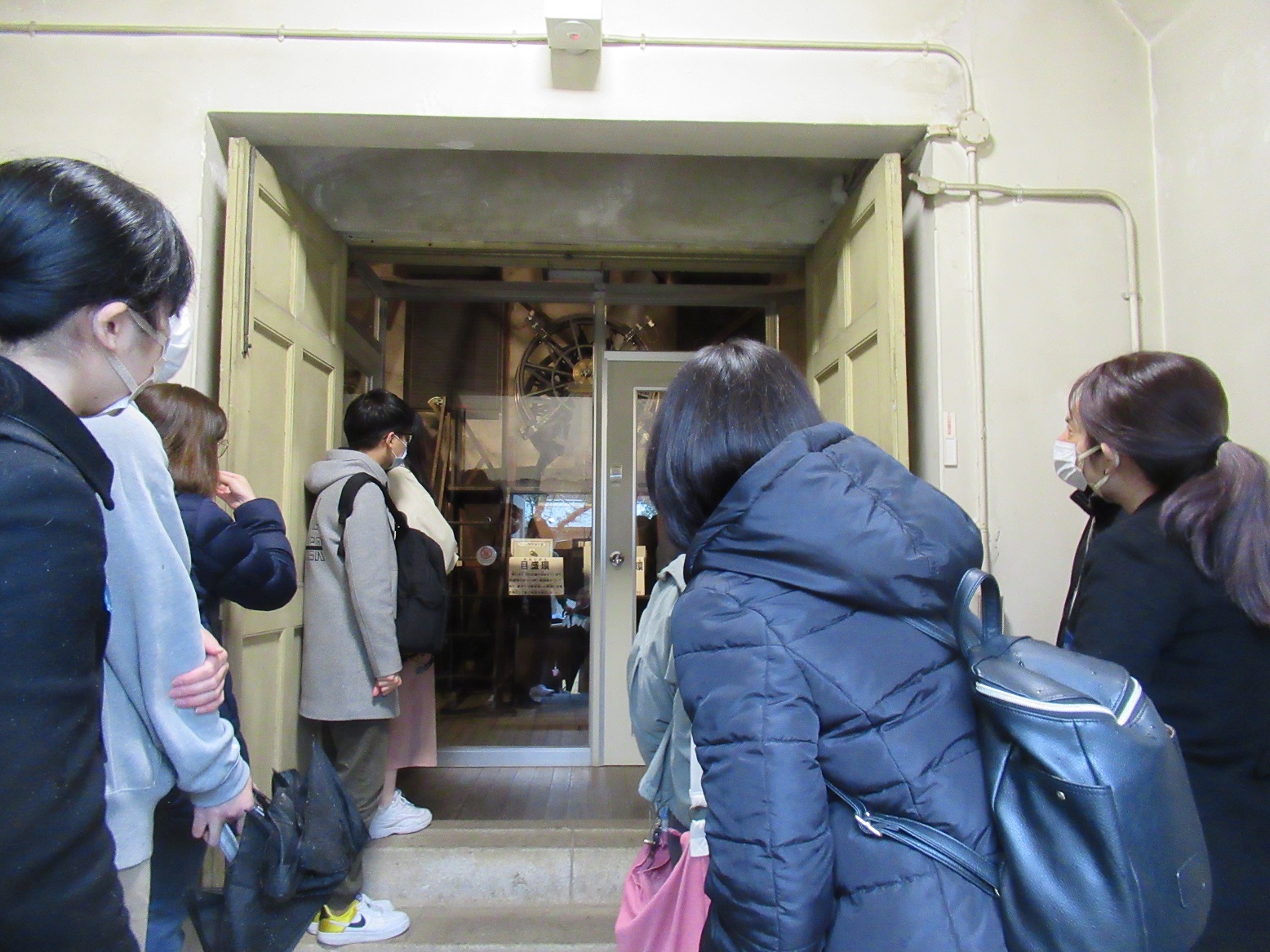
The Gautier Meridian Ring Room houses the Gautier Meridian Ring, which has been used for many years to observe the positions of the moon, planets, and fixed stars by visual observation. The building was constructed in 1924 and has a beautiful design that combines disparate shapes: a semi-circular dome with a trapezoidal roof at the entrance.
-
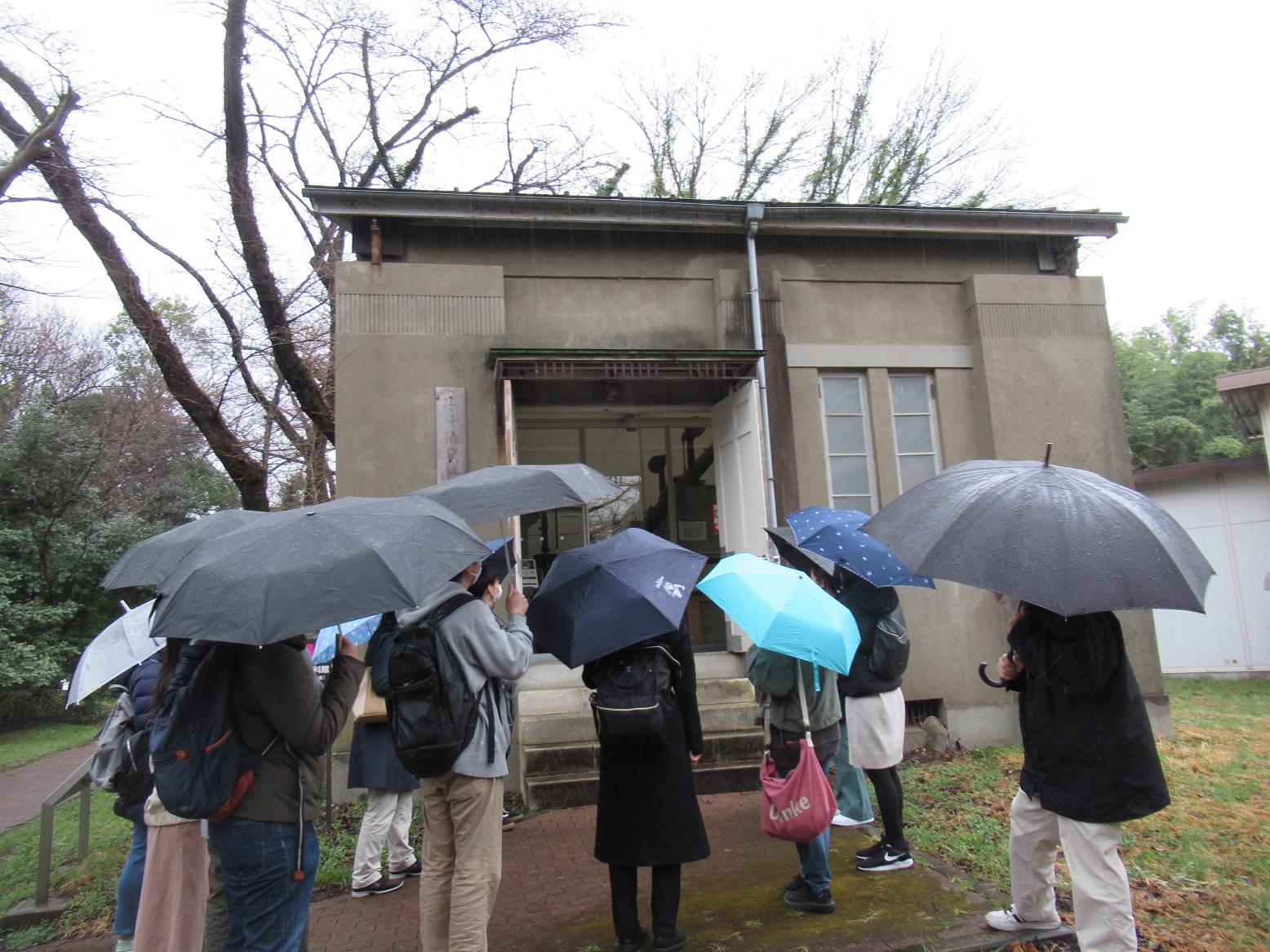
The "Repsoldo Museum (Repsoldo Meridian)" exhibits a number of valuable meridian rings. In the past, the Repsoldo Meridian was used to determine the equinoxes of the moon, planets, and major asteroids.