

Notices
A New Subspecies of Japanese Snail Mite, Previously Thought to be the Same Species as the French Mite ~Designated as a Distinct Subspecies from Okinawa Island and from Kyushu and Northwards~ :: Hosei University
- May 09, 2022
A research group led by Professor SHIMANO Satoshi of Hosei University, Lecturer WAKI Tsukasa of Toho University and Dr. MOTOCHEN Rikisho of the Natural Environment Research Center, and Professor ASAMI Takahiro of Shinshu University has reported two Japanese subspecies of one species of snail mite, Daidai snail mite.
The paper was published in Systematic and Applied Acarology (ISSN: 13621971 ) in May 2022.
◆Name of Presenter
SHIMANO Satoshi (Professor, Center for Natural Science and Technology, Hosei University)
Tsukasa Waki (Lecturer, Department of Environmental Science for Biosphere, Faculty of Science, Toho University)
Key points of the presentation
The mite, Dipterocarpus daiadai, is a parasitic mite of snails and slugs and was described as a new species in France in 1986, and its collection in Japan was reported 32 years later, in 2018. It is thought to be widely distributed from France to Japan, and has one of the largest distribution ranges of any snail-specific parasite.
The widely distributed species may differ in morphology from region to region and may be subspecies, especially in geographically isolated areas. Therefore, when the research group collected specimens of the Daedai catatamurid mites from various locations throughout Japan and examined their morphology closely, they found that minute differences in morphology were recognized and distinguished among mites from France, Okinawa Island, and Kyushu and northward, and these Japanese distributed ones were classified into two new subspecies, " The two Japanese subspecies were named "Nihon daidai katatsumuridani" and "Ryukyu daidai katatsumuridani".
The two subspecies discovered in this study are likely to have differentiated uniquely from the continental species in the island nation of Japan.
◆Summary of the announcement
The dai-dai snail mite (scientific name: Riccardoella reaumuri) is a species of mite as small as 0.5 mm in length (Fig. 1). It lives as a parasite on the lungs and body surface of various species of land snails (snails and slugs) (Figure 2) and is not a human parasite. This mite was first reported in 1986 from a French snail. Subsequently, it was discovered as the same species from Okinawa, Japan, after 2018, and further surveys since then have shown that it is widely distributed from Okinawa to Hokkaido, Japan. Thus, this mite species is distributed from France to Japan and is considered to be one of the species with one of the largest distribution ranges for a land shell specialist parasite.
On the other hand, when a species with poor mobility is widely distributed, it is known that geographical variation accumulates in each region and that it tends to become subspecies, especially on isolated islands. Land snails lack horizontal mobility and cannot travel long distances or cross oceans. Since the Diptera tamuridani is also a microscopic parasite, it is thought to be unable to travel long distances on its own. The research group therefore examined and compared the morphology of individual mites in each region in detail, because it is difficult to believe that these mites, which lack mobility, are exactly the same in France as in the Japanese archipelago. As a result, they found that the morphology of the microscopic bristles and body size differed from region to region. Based on this, the mites from the main island of Okinawa and those from Kyushu and northward were designated as subspecies "Ryukyu dai dai dai katatsumuridani" and "Nihon dai dai dai katatsumuridani," respectively (Fig. 3).
There are eight species of snail mites in the world, four of which, including this species, are distributed worldwide, but this is the first study in the world to distinguish microscopic morphology in different regions and to identify them as subspecies. The discovery of this subspecies is proof that even globally distributed species have some differences in the Japanese archipelago, which is separated from the continent by the sea, and is also evidence that understanding biodiversity in Japan is important from a global perspective. It can be said that the importance of biodiversity is the same even for parasites.
◆Published Journals
Journal name: "Systematic and Applied Acarology
Title of paper: Two subspecies of the snail mite Riccardoella (Proriccardoella) reaumuri Fain & van Goethem, 1986 (Acari, Prostigmata, Ereynetidae) from Japan
Author: Tsukasa Waki, Risho Motochin, Takahiro Asami, Satoshi Shimano.
DOI number: 10.11158/saa.27.5.2
Abstract URL: https://doi.org/10.11158/saa.27.5.2
Attachments
-
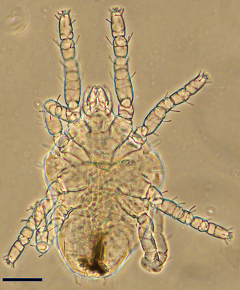
Figure 1. Japanese daiidai katatsumuridani. From Shizuoka Prefecture, Japan. Scale: 0.1 mm.
-
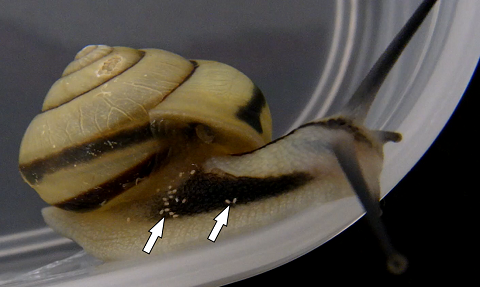
Figure 2.

Figure 3. Main differences in morphology between the French daiadicatamuridani and the new subspecies in Japan.
Inquiries about the research: [Inquiries about the research
SHIMANO Satoshi, Professor, Center for Natural Science and Technology, Faculty of Intercultural Communication, Hosei University
E-Mail: sim@hosei.ac.jp
For media inquiries, please contact
Public Relations Division, Office of the President, Hosei University
TEL: 03-3264-9240 E-mail: pr@adm.hosei.ac.jp